Session Two: Occultism in the Ages of Enlightenment and Romanticism
"The Great Work is, before all things, the creation of man by himself, that is to say, the full and entire conquest of his faculties and his future; it is especially the perfect emancipation of his will, assuring him universal dominion over Azoth and the Light; it is the transmutation of the eternal, and not the vulgar gold of the alchemists." - Eliphas Levi
We explore the occult currents in the Enlightenment (18th century), which was deeply influenced by Freemasonry. Freemasons played a critical role in the American and French Revolutions. We will inquire into the Illuminati, one of the most controversial secret societies in history, inspiring numerous conspiracy theories and myths. While their actual influence on the esoteric tradition is debated, the Illuminati remain a fascinating topic for exploration, with connections leading to secret societies in American Ivy League universities.
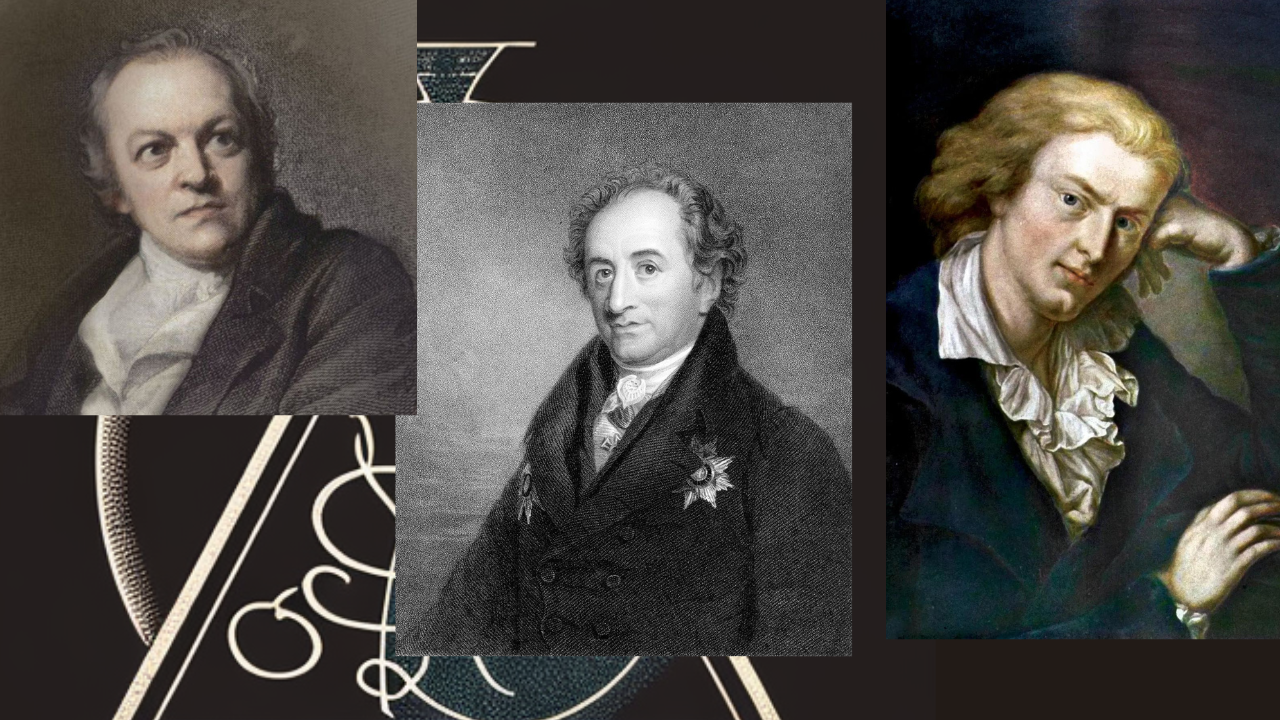
We’ll explore the intersection of Romanticism and the Occult in the late 18th to early 19th centuries. This period of art, literature, and philosophy emphasized individual experience and emotions, often embracing supernatural themes and symbolism, as well as explorations of altered states such as hypnagogia. William Blake (1757-1827) believed that the true method of knowledge is through experimentation, while Johann Wolfgang von Goethe (1749-1832) sought to create a new approach to a science illuminated by subjective experience. Friedrich Schiller (1759-1805) emphasized the importance of play in authentic self-expression. Hegel integrated a mystical ideal of universal evolution into his philosophy.
We'll delve into the enigmatic figure of Count Alessandro di Cagliostro (18th century), an Italian adventurer who claimed to possess the secrets of ancient wisdom and the power to heal and transform individuals and society. Eliphas Levi (1810-1875) was a French occult author and ceremonial magician who influenced the development of Western esotericism, particularly the Hermetic Order of the Golden Dawn. The Golden Dawn synthesized various esoteric traditions, including Kabbalah, alchemy, astrology, and ceremonial magic. It significantly influenced subsequent occult and magical movements.